


Description
The term BNC F BT 3002 CRIMP likely refers to a specific type of BNC (Bayonet Neill-Concelman) connector, with certain characteristics related to its design, configuration, and usage. Breaking down the definition: BNC (Bayonet Neill-Concelman): A BNC connector is a type of coaxial cable connector commonly used in a variety of electronic and communication applications. It features a bayonet coupling mechanism, which allows for a quick and secure connection and disconnection. It is often used in video applications, such as for CCTV cameras, as well as for RF (radio frequency) connections in test equipment, networking, and broadcasting. F: The "F" designation typically indicates the female version of the BNC connector. The female connector has a center hole (receptacle) into which a male BNC plug, with a protruding pin, can be inserted. BT: BT is likely an abbreviation that could refer to specific manufacturing or connection types, but its meaning can vary depending on the manufacturer or specific application. It might also refer to a brand or a particular series of connectors designed for a specialized purpose. Without additional context, it’s not entirely clear what BT stands for in this case. 3002: 3002 could be a model number or part number used by the manufacturer to identify a specific connector variant or configuration. It might indicate the size, materials, or other specific features of this particular BNC connector. CRIMP: The "crimp" method refers to a way of attaching the connector to a coaxial cable. Instead of using soldering, crimping involves using a specialized tool to press a metal connector onto the cable, ensuring a tight and secure connection. Crimping is commonly used because it is faster, requires less skill, and provides a reliable connection. Summary: The BNC F BT 3002 CRIMP appears to refer to a female BNC connector, with a specific model number (3002), designed for crimp-style connection to coaxial cables. The "BT" could be a series or brand identifier, and the crimping method ensures a solid and reliable mechanical connection between the connector and the cable. This type of connector is likely used in various fields where coaxial cables are employed, including video transmission, telecommunications, and test equipment.
Keywords
other Products
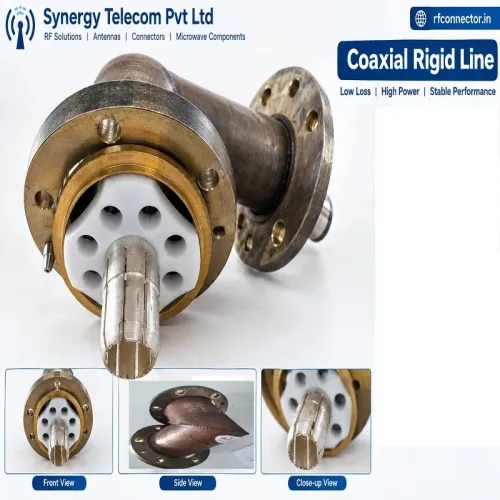 RF CONNECTOR HOUSE Parameter Specification Product Coaxial Rigid Line Type Rigid Coaxial Transmission Line Impedance 50 Ω Constru
COAXIAL RIGIT LINE
INR 50000INR 80000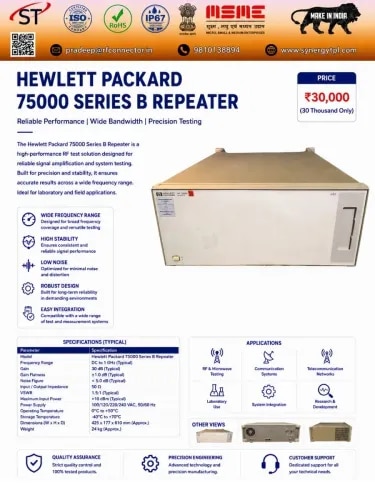 HEWLETT PACKARD Hewlett-Packard (HP) 75000 Series B is a modular VXIbus instrumentation platform designed for automated electr
HEWLETT PACKARD 75000 S...
INR 30000- AGILENT Agilent E4408B ESA-L Spectrum Analyzer is a professional RF and microwave spectrum analyzer covering a frequen
AGILENT E4408B SPECTRUM...
INR 750000 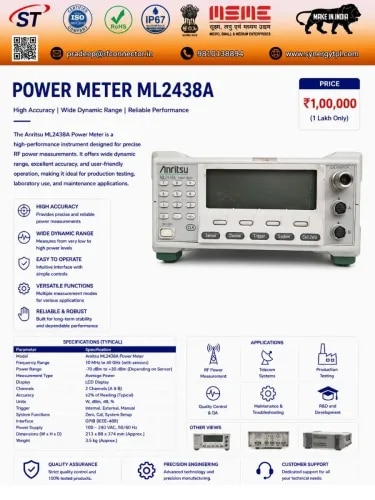 ANRITSU Anritsu ML2438A Power Meter is a high-performance dual-channel RF and microwave power measurement instrument d
ANRITSU ML 2438A POWER ...
INR 100000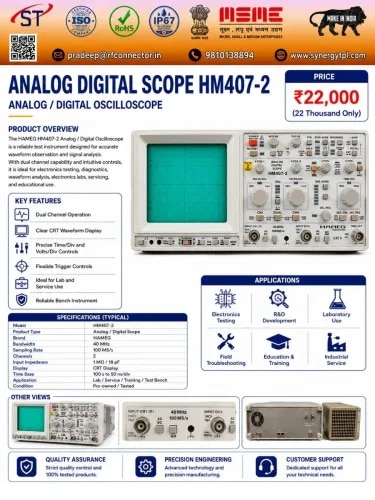 HAMEG HAMEG HM407-2 is a 40 MHz, two-channel analog/digital storage oscilloscope designed for laboratory, service, e
HAMEG HM407 -2 ANALOG /...
INR 22000