


Description
The TNC M LMR 100 CRIMP refers to a specific type of connector used in telecommunications and RF (Radio Frequency) applications. Let’s break down the components: TNC (Threaded Neill–Concelman): The TNC connector is a type of coaxial RF connector that uses a threaded coupling mechanism. It is similar to the BNC connector but provides a more secure and stable connection due to the threads. TNC connectors are commonly used in applications where a more robust, vibration-resistant connection is required. They are typically used in systems that operate in the RF frequency range and are found in various types of equipment like antennas, radios, test instruments, and communication systems. M (Male): The M refers to the male version of the TNC connector. Male connectors have a pin that fits into the female connector, which has a corresponding hole for the pin to fit into, ensuring the connection is stable. LMR 100: LMR 100 is a type of low-loss coaxial cable commonly used in RF and communication systems. It is characterized by its relatively small diameter and flexible design, making it suitable for applications where space is a constraint or where flexibility is necessary. The 100 designation typically refers to the specific cable type in the LMR series, which is designed to offer a balance between performance and cost for applications in the lower frequency range (up to several GHz). It is often used in Wi-Fi, mobile communication, and other RF transmission applications. CRIMP: Crimp refers to the method used to attach the TNC connector to the LMR 100 cable. Crimping involves using a specialized tool to secure the connector to the cable by compressing the connector’s metal parts around the cable. This creates a strong electrical and mechanical bond. Crimping is a preferred method for many RF applications because it provides a reliable and repeatable connection without the need for soldering. Summary: The TNC M LMR 100 CRIMP connector is a male TNC connector designed to be crimped onto LMR 100 coaxial cable. This combination is typically used in RF and telecommunications systems where low loss, flexibility, and secure connections are important. The crimping method ensures a reliable connection that can withstand environmental stresses like vibration or movement.
Keywords
other Products
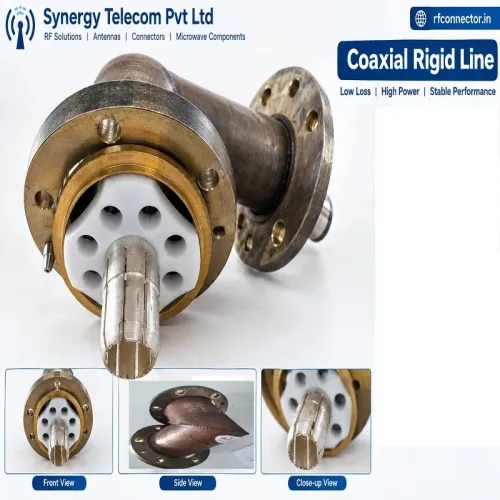 RF CONNECTOR HOUSE Parameter Specification Product Coaxial Rigid Line Type Rigid Coaxial Transmission Line Impedance 50 Ω Constru
COAXIAL RIGIT LINE
INR 50000INR 80000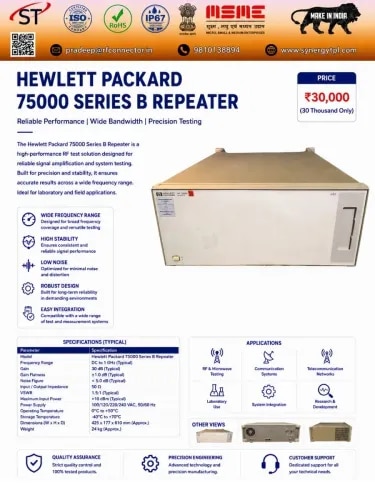 HEWLETT PACKARD Hewlett-Packard (HP) 75000 Series B is a modular VXIbus instrumentation platform designed for automated electr
HEWLETT PACKARD 75000 S...
INR 30000- AGILENT Agilent E4408B ESA-L Spectrum Analyzer is a professional RF and microwave spectrum analyzer covering a frequen
AGILENT E4408B SPECTRUM...
INR 750000 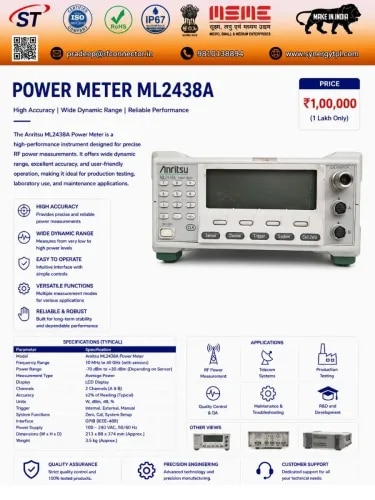 ANRITSU Anritsu ML2438A Power Meter is a high-performance dual-channel RF and microwave power measurement instrument d
ANRITSU ML 2438A POWER ...
INR 100000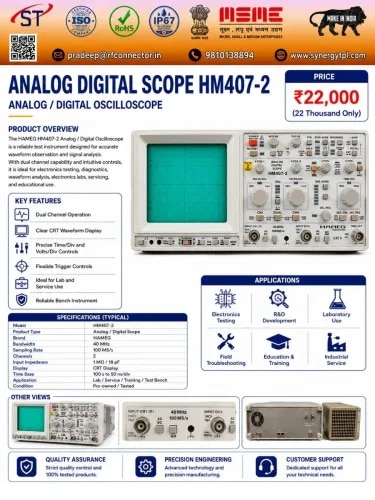 HAMEG HAMEG HM407-2 is a 40 MHz, two-channel analog/digital storage oscilloscope designed for laboratory, service, e
HAMEG HM407 -2 ANALOG /...
INR 22000