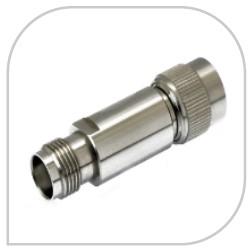
Description
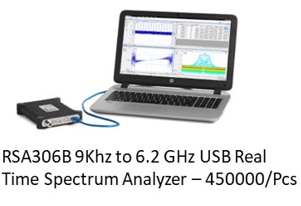
Testing equipment is essential for validation, troubleshooting, and quality control across industries like electronics, telecommunications, automotive, and manufacturing. Below is a detailed breakdown of key testing tools, their applications, and top brands. 1. Types of Testing Equipment A) Electronic Test Equipment Multimeters – Measures voltage, current, resistance. Example: Fluke 87V (Industrial-grade). Oscilloscopes – Analyzes signal waveforms. Example: Keysight InfiniiVision 3000T (100 MHz–1 GHz). Signal Generators – Produces test signals. Example: Rigol DG800 (Arbitrary waveform generator). Network Analyzers – Tests RF components (S-parameters). Example: Keysight PNA Series (Up to 67 GHz). B) RF & Wireless Test Equipment Spectrum Analyzers – Measures frequency spectrum. Example: Rohde & Schwarz FPC1500. Power Meters – Measures RF power levels. Example: Bird 43 (Peak/Avg power). PIM Testers – Checks passive intermodulation. Example: Kaelus iPA-M. C) Environmental & Durability Testers Thermal Chambers – Tests temperature resistance. Example: ESPEC T-240. Vibration Shakers – Simulates mechanical stress. Example: LDS V900 Series. D) Automotive Test Equipment OBD-II Scanners – Diagnoses vehicle faults. Example: Autel MaxiCOM MK808. Battery Testers – Checks EV/hybrid batteries. Example: Midtronics EXP-1000. E) Industrial & Safety Testers Insulation Testers – Measures electrical insulation. Example: Megger MIT400. Earth Ground Testers – Tests grounding systems. Example: Fluke 1625-2. 2. Key Features to Consider ✔ Accuracy – High precision (e.g., ±0.1% for multimeters). ✔ Frequency Range – Critical for RF (e.g., 6 GHz vs. 40 GHz). ✔ Portability – Handheld vs. benchtop. ✔ Software Integration – PC connectivity (LAN/USB/GPIB).