


Description
The DIN F BH LMR 400 CRIMP refers to a specific type of connector and cable combination used in radio frequency (RF) communication systems. Let me break down the components for clarity: DIN: Refers to the Deutsches Institut für Normung, which is the German standardization body. In the context of RF connectors, it typically refers to a series of connectors that are standardized for high-frequency applications, commonly used in communication systems. F: In this case, "F" likely refers to a type of connector. The F connector is commonly used for RF signals in the cable TV industry, among other applications. It is a threaded connection, often used to connect coaxial cables to various devices or systems. BH: This could be a specific model or variant of the DIN or F connector series, likely indicating a particular design, style, or feature that meets certain specifications, such as weatherproofing or other technical attributes. LMR 400: This refers to the LMR-400 coaxial cable, which is a popular type of low-loss, flexible, and durable coaxial cable used in RF and communication systems. It is widely used in high-frequency applications such as wireless communications, antennas, and signal transmission. CRIMP: Refers to the crimping method used to attach connectors to the cable. Crimping is a process where the connector is securely attached to the cable using a special crimping tool. This method ensures a stable electrical connection while maintaining the integrity of the cable. Putting It Together: DIN F BH LMR 400 CRIMP likely describes a DIN or F-type connector (with the "BH" being a specific model) used in combination with LMR-400 coaxial cable. The connection is made using a crimping technique, ensuring a secure and reliable connection suitable for high-frequency RF applications. This setup is typically used in communication networks, antenna systems, and other applications where low-loss signal transmission is critical.
Keywords
other Products
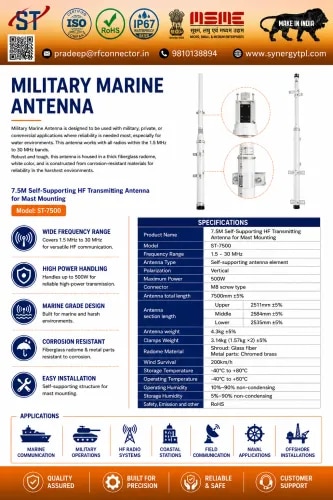 RF Connector House The ST-7500 is a 7.5-meter self-supporting HF transmitting antenna designed for military, marine, coastal and
Military Marine Antenna...
INR 29999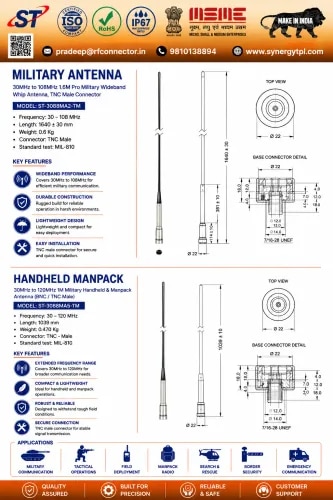 RF Connector House The ST Military Antenna series is designed for reliable communication in military, tactical and field-deployme
Military Antenna – 30–1...
INR 6499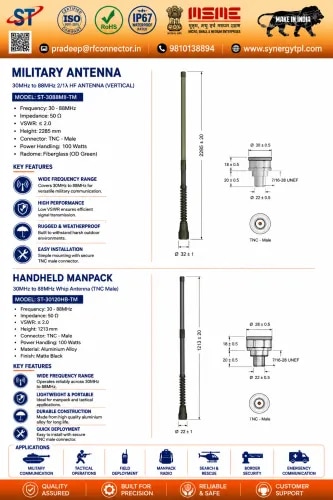 RF Connector House ST Military Antenna series is designed for reliable communication in military, tactical and field-deployment e
Military Antenna – 30–1...
INR 6999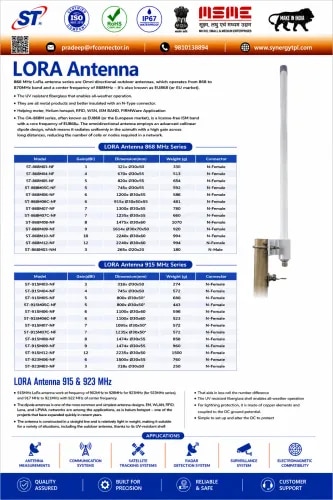 RF Connector House The ST LoRa Antenna series consists of omnidirectional outdoor antennas designed for LoRa and wireless communi
LoRa Antenna – 868 MHz ...
INR 2499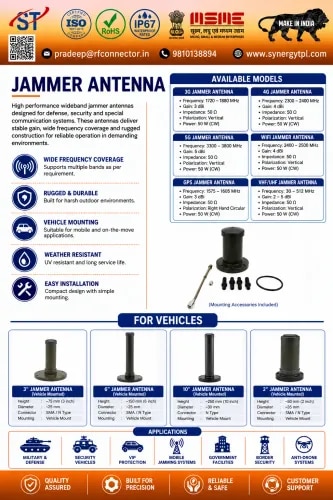 RF Connector House Wideband RF antennas designed for vehicle-mounted and outdoor RF applications. The antennas are available in m
Wideband RF Antenna
INR 13500