Description
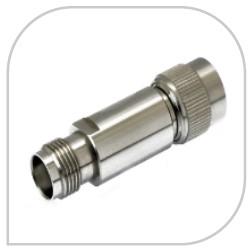
The term BNC M RG 11 CRIMP refers to a type of connector and cable used in certain communication or audio/video systems. Let's break down the components: BNC (Bayonet Neill–Concelman): This refers to a type of coaxial connector commonly used in RF (radio frequency) applications. BNC connectors are widely used in video, telecommunications, and data networks due to their reliability and ease of use. The "bayonet" mechanism involves a simple twist-and-lock system to securely attach the connector to its counterpart, making it quick to connect and disconnect. M (Male): The "M" stands for "Male," indicating the type of BNC connector. A male connector has a central pin that connects to a corresponding female (socket) connector. RG 11: RG (Radio Guide) is a designation for a type of coaxial cable. RG 11 is a specific size of coaxial cable, thicker than many others like RG 6, and it is often used for long-distance signal transmission because of its lower attenuation (signal loss). RG 11 cables are used for high-frequency applications and are particularly suitable for HDTV, broadband internet, and other high-performance applications. CRIMP: The term "crimp" refers to the method of attaching the connector to the cable. Instead of soldering, a crimping tool is used to press a metal connector onto the cable, creating a secure, permanent bond between the cable and the connector. Crimping is often preferred for its speed and reliability compared to soldering, as it requires no heat and reduces the risk of damaging the cable or connector. Summary: The BNC M RG 11 CRIMP refers to a male BNC connector designed for use with RG 11 coaxial cable, attached using a crimping process. This combination is ideal for transmitting signals in applications requiring high-frequency, low-loss performance over longer distances, such as in professional video or telecommunications systems.