


Description
The term BNC F 4 Hole LMR 200 Crimp refers to a specific type of connector and crimping tool used in the assembly of coaxial cables, particularly those involving LMR 200 cables. Let's break down the definition: BNC: This stands for Bayonet Neill-Concelman, a type of coaxial cable connector. BNC connectors are commonly used for applications in radio frequency (RF) systems and are known for their quick-connect mechanism, which involves a bayonet-style lock. They are often used in telecommunications, broadcasting, and network systems. F: This typically indicates that the connector is female, meaning it has a receptacle to accept a male (plugs) BNC connector. 4 Hole: This refers to the four holes in the BNC connector's flange. These holes are used for securing the connector to a mounting panel or surface using screws, which allows for a stable and durable connection. The four-hole design is typically used in applications where the connector needs to be mounted to a panel or enclosure for more secure and permanent installations. LMR 200: This is a specific type of coaxial cable. LMR 200 is a low-loss, flexible coaxial cable often used in high-frequency applications such as antenna systems, networking, and broadcasting. It has a characteristic impedance of 50 ohms and is known for its durability and resistance to environmental factors like moisture and UV exposure. Crimp: This refers to the crimping process used to attach the BNC connector to the LMR 200 cable. Crimping is a method of mechanically attaching a connector to the end of a wire or cable. The crimping tool applies pressure to the connector's metal sleeve, which tightly grips the wire and ensures a solid electrical and mechanical connection. The crimping process is an alternative to soldering and provides a reliable, durable connection for many coaxial cable applications. Summary: A BNC F 4 Hole LMR 200 Crimp is a BNC female connector designed for LMR 200 coaxial cables, featuring a four-hole flange for secure panel mounting. It is designed to be attached to the cable via the crimping process, which provides a secure and stable connection. These types of connectors are commonly used in RF systems, networking, and telecommunications.
Keywords
other Products
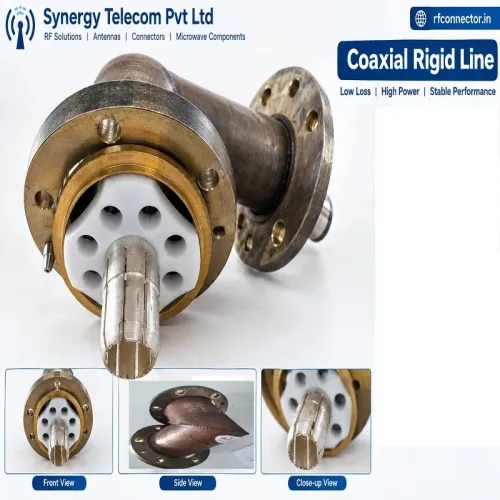 RF CONNECTOR HOUSE Parameter Specification Product Coaxial Rigid Line Type Rigid Coaxial Transmission Line Impedance 50 Ω Constru
COAXIAL RIGIT LINE
INR 50000INR 80000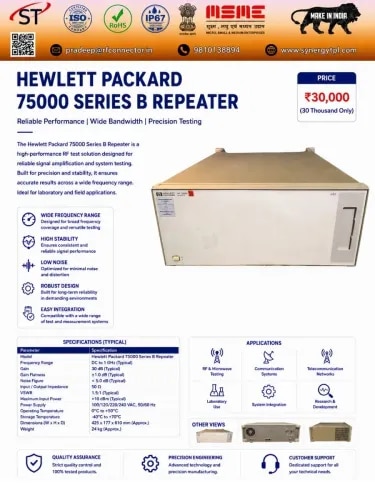 HEWLETT PACKARD Hewlett-Packard (HP) 75000 Series B is a modular VXIbus instrumentation platform designed for automated electr
HEWLETT PACKARD 75000 S...
INR 30000- AGILENT Agilent E4408B ESA-L Spectrum Analyzer is a professional RF and microwave spectrum analyzer covering a frequen
AGILENT E4408B SPECTRUM...
INR 750000 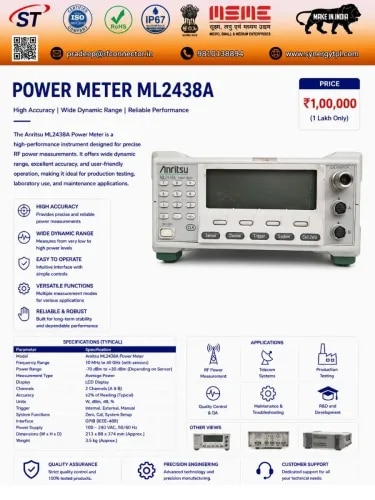 ANRITSU Anritsu ML2438A Power Meter is a high-performance dual-channel RF and microwave power measurement instrument d
ANRITSU ML 2438A POWER ...
INR 100000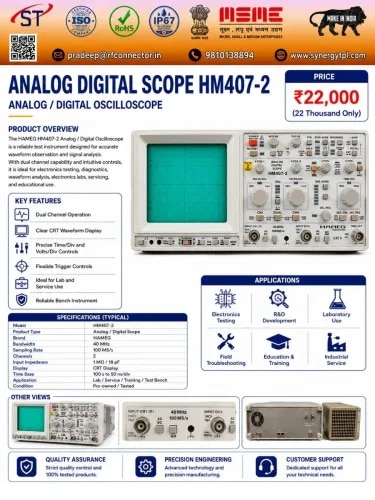 HAMEG HAMEG HM407-2 is a 40 MHz, two-channel analog/digital storage oscilloscope designed for laboratory, service, e
HAMEG HM407 -2 ANALOG /...
INR 22000