

2025-07-01T08:15:16
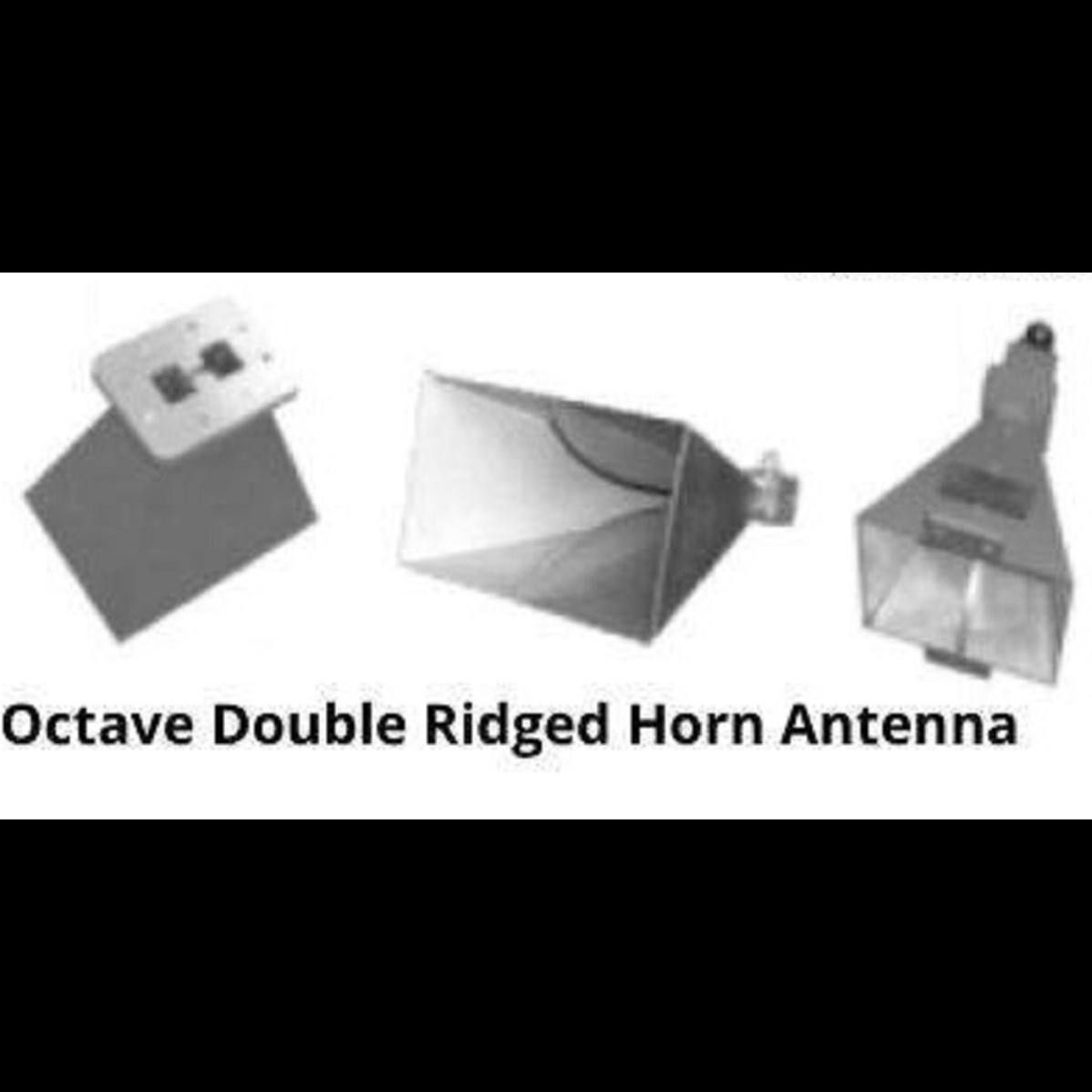
An octave double-ridged horn antenna is a broadband antenna designed to operate over at least a 2:1 frequency range (i.e., one full octave), making it ideal for wideband RF testing, EMC measurements, and communication systems. 📡 Key Features - Frequency Range: Typically spans from 500 MHz to 4 GHz, though some models extend from 1 GHz to 18 GHz or higher - Gain: Around 14–17 dBi, depending on frequency and aperture size - Polarization: Linear (some models support dual polarization) - VSWR: Typically < 2:1 across the band - Power Handling: High power capability, often >100 W CW 🛠️ Design & Construction - Structure: Pyramidal horn with double-ridged waveguide to support wideband impedance matching - Material: Precision-machined metal (usually aluminum) - Mounting: Tripod or bench mountable - Weight: Lightweight designs (~3.2 kg) are available for lab portability 🧪 Applications - EMC/EMI Testing: Radiated immunity and emissions testing - Antenna Calibration: Used as a reference antenna in anechoic chambers - Wireless & IoT: Suitable for testing 2G/3G/4G LTE, LoRa, NB-IoT, and public safety bands - Broadcast & Telecom: UHF/VHF television and cellular system deployment For example, the OBH-1020-15 from RFecho offers 15 dBi gain across 1–2 GHz, while Synergy Telecom’s model covers 500–4000 MHz, making it a solid choice for multi-octave testing. Want help comparing this to a four-ridged or ultra-wideband variant? I can walk you through beamwidth, gain flatness, or even test setup integration.
Have a question? Ask here!
Required fields are marked *