

2025-07-01T07:24:40
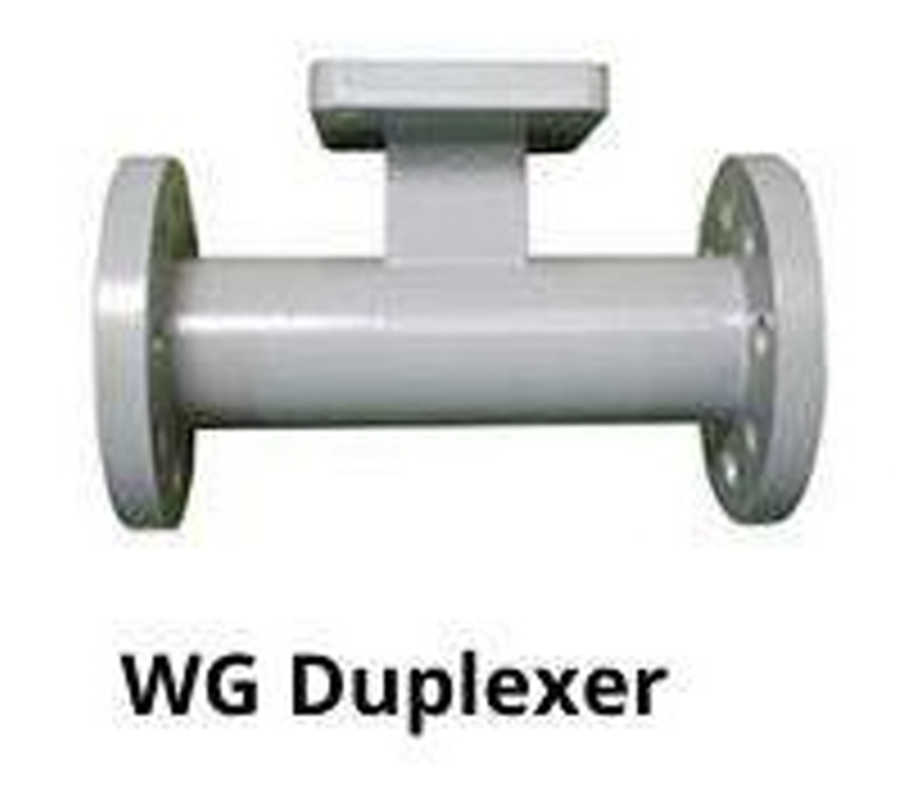
A waveguide (WG) duplexer is a passive RF component that enables simultaneous transmission and reception of signals through a shared antenna or waveguide path—without interference between the two paths. It’s a critical element in radar, satellite, and communication systems where isolation, power handling, and low insertion loss are essential. 🔧 Key Technical Features: - Function: Separates transmit (Tx) and receive (Rx) signals operating at different frequencies, allowing them to share a common waveguide. - Frequency Bands: Available for L, S, C, X, Ku, K, and Ka bands, with models covering from 50 MHz to 50 GHz. - Isolation: Typically ≥ 60 dB, ensuring minimal leakage between Tx and Rx paths. - Insertion Loss: As low as 0.2–0.5 dB, preserving signal strength. - Power Handling: High-power models can handle up to 1 MW peak and 7 kW average. - Construction: Rugged, hermetically sealed aluminum or copper bodies with MIL-STD finishes for harsh environments. 🛰️ Applications: - Radar Systems: Used in airborne (e.g., AWACS), naval, and ground-based platforms. - Satellite Communications: Enables full-duplex operation with shared antennas. - Telecom Infrastructure: Supports high-isolation channel separation in microwave links.
Have a question? Ask here!
Required fields are marked *